A Gas Safety Certificate is an official document issued by a registered Gas Safe engineer after they inspect your property’s gas appliances, fittings, and flues. The certificate confirms that the appliances are functioning properly, safely, and in compliance with UK regulations.
If you're a landlord in Isle of Dogs, the law under the Gas Safety (Installation and Use) Regulations 1998 requires you to:
Have all gas appliances checked annually by a Gas Safe registered engineer.
Provide tenants with a copy of the Gas Safety Certificate within 28 days of the inspection or before they move in.
Keep records of inspections for at least two years.
Ensure any repairs or recommendations made by the engineer are carried out promptly.
Failing to meet these legal obligations can result in hefty fines, invalidated insurance, or even criminal prosecution.
If you own a rental property in London, you have a legal duty to keep your tenants safe. One of the most important parts of this duty is getting a CP12 Certificate every year. This document proves that your property's gas appliances and pipework have been checked by a qualified Gas Safe registered engineer.
Many landlords hear the terms CP12 Certificate and Gas Safety Certificate used together. In fact, they refer to the same inspection record. The certificate confirms that gas appliances have been tested and meet the required safety standards.
This guide explains what a CP12 Certificate is, why it matters, and how it helps landlords stay compliant with UK law.
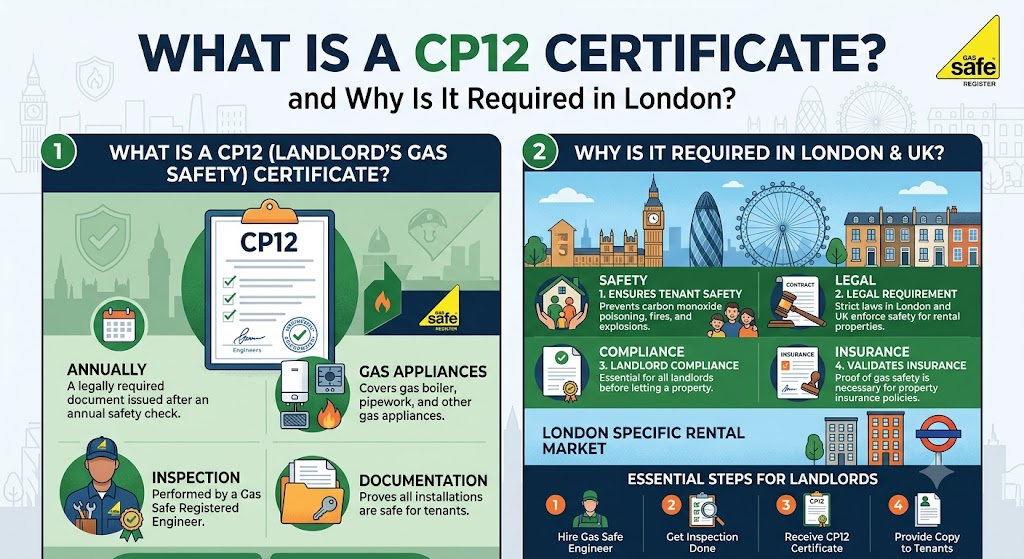
A CP12 Certificate is the official record of a gas safety inspection. It is issued after a Gas Safe registered engineer checks the gas appliances, pipework, flues, and ventilation in a property.
The inspection helps make sure that gas systems are working safely. It also checks for faults that could put people at risk.
After the inspection, the engineer records the results on the certificate. If any problems are found, they will explain what repairs are needed.
Gas appliances can become unsafe over time. Wear and tear, poor maintenance, or faulty parts can lead to dangerous problems.
Some of the most common risks include:
Carbon monoxide is especially dangerous because you cannot see it or smell it. A faulty boiler or gas fire can produce this harmful gas without warning.
Annual inspections help find these problems early. They protect tenants and reduce the chance of costly repairs later.
Yes. UK law requires landlords to arrange a gas safety inspection every 12 months if their property has gas appliances.
The inspection must be completed by a Gas Safe registered engineer. Once the inspection is finished, the landlord receives the CP12 Certificate.
Landlords must also:
Failing to follow these rules can lead to fines, legal action, and problems with insurance claims.
London has one of the UK's largest rental markets. Thousands of flats, houses, and shared homes rely on gas for heating, hot water, and cooking.
Many buildings also have older gas systems that need regular checks. Annual inspections help make sure these systems continue to work safely.
Booking a gas safety certificate London service each year gives landlords confidence that their property meets current safety standards. It also helps protect tenants from avoidable risks.
During the inspection, the engineer carries out several safety checks.
These usually include:
The engineer also checks that harmful gases are leaving the property through the correct ventilation system.
If an appliance is unsafe, the engineer may disconnect it until repairs have been completed.
A CP12 Certificate contains important information about the inspection.
It usually includes:
Landlords should keep these records in a safe place.
A CP12 Certificate is mainly required for landlords.
This includes:
Homeowners are not legally required to have a CP12 Certificate. However, regular gas safety inspections are still recommended. They help keep gas appliances safe and efficient.
The inspection should take place every 12 months.
Many landlords book the next inspection before the current certificate expires. This makes it easier to stay compliant without missing the renewal date.
Planning ahead also gives enough time to complete any repairs if problems are found during the inspection.
Sometimes the engineer finds faults that need attention.
These may include:
The engineer will explain the issue and recommend the correct repair.
In serious cases, they may disconnect the appliance to prevent accidents.
Once the repairs are completed, the appliance can be tested again to confirm it is safe to use.
Most inspections take between 30 minutes and two hours.
The time depends on:
Larger homes or commercial properties may take longer.
Annual inspections offer more than legal compliance.
They can also:
Finding small issues early often prevents larger and more expensive repairs in the future.
Always choose a Gas Safe registered engineer.
Gas Safe registration shows that the engineer has the training and qualifications needed to work safely with gas appliances.
Before booking an inspection, ask to see their Gas Safe ID card. You can also check their registration online.
Working with a qualified engineer helps ensure the inspection is carried out correctly and follows UK safety regulations.
Keeping your property safe is easier with a simple maintenance plan.
Here are a few helpful tips:
These simple steps help keep your property safe throughout the year.
A CP12 Certificate is one of the most important safety documents for any rental property. It proves that gas appliances have been inspected by a qualified engineer and meet legal safety standards.
Annual inspections protect tenants, reduce the risk of gas-related accidents, and help landlords meet their legal responsibilities. They can also improve the performance of heating systems and reduce unexpected repair costs.
If you own or manage a rental property, arranging a gas safety certificate London inspection every year is an essential part of responsible property management. Booking your inspection before the current certificate expires helps you stay compliant and gives your tenants confidence that their home is safe.
Whether you own one property or several across the capital, a yearly gas safety certificate London inspection is a simple step that supports safety, legal compliance, and long-term property care.
"*" indicates required fields